To the noble, honorable and valiant, respectable and wise Markgraphischen Provinz-Administrator, Mayor and Council of the city of Nuernberg, our favored Lords and Friends.
Grace and peace in Christ. Noble, Respectable, Valiant, Honorable and Wise especially favored Lords and Friends! We have the delivered church-order and message of the Visitation in which the illustrious, high-born Prince and Lord, Herr Georg, Markgraf in Brandenburg, his lands and princedom, and also of yours the Lords of Nuernberg Authority and Regions unitedly (?)(einhellig) and uniformly composed and established avoiding inequality both in doctrine and also in several external ceremonies and earnestly read them and also as much as possible pondered them and found them, in summary, according to the divine Word and in agreement with our Visitation-Order and we
are well-pleased with them. Only in several articles which you have especially named in part as to the Ban as you would exercise it and you will perceive our thoughts and the relevant Scriptures. The same you will as sensible people according to opportunity and need consider and understand so that chiefly the pure doctrine and preaching is preserved and thereby there is harmony and good order and so that there are Christian ceremonies without misuse. Although the course of this time is so crooked so that church-orders necessarily cannot hastily be constructed and determined yet one must preserve the pure doctrine and also external discipline and behavior and guard against unrighteousness improving daily until the Almighty grants more peace and unity both in the church and worldly regimens. And so that we in such Christian efforts might serve you we are intent on doing with all our ability. Dated at Wittenberg on 1 August anno 1532. D. Martinus Luther,Justus Jonas,Joannes Bugenhagins, Philippus Melachton.
REGARDING THE BANN
We have instituted no other Bann at this time than prohibiting the admission to the Sacrament of the Body and Blood of Christ those who commit public vices and who will not cease from the same; and in order that this may be maintained by us no one is extended the Sacrament who has not previously been examined by the pastors or deacons.We also do not think that at this time any other sort of Bann should be instituted; there are many cases previously which required a hearing (cognitio). We cannot now see how a hearing should be instituted and ordered; the worldly authority wants nothing to do with this hearing. So let one keep it and let it remain that the
Holy Sacrament is not offered to those who are and remain in public vices.And although the world presently is so crude and wild that they are not eager for the Sacrament or Church and on that account would not regard this as punishment. Let one be excommunicated if the worldly authority wants to allow public vices. Nevertheless the preachers with all earnestness should rebuke in sermons all such heathen essence and life with the proclamation of divine threats and thereby have the potential (potestates) admonition of warding of such heathen existence.
If there should be re-instituted a previous hearing before a trial which was very useful and good there might occur a discipline and punishmnet established by the parents to urge their children and household to the Sacrament guarding against the young folk from despising the Sacrament and advocating divine matters.
Should the public Bann be instituted the secular authority must support an ordinance which (requires?) avoiding the banned person if others are to take the public Bann as a serious example: there is also at this time especially in large cities and regimes much unrighteousness created. However, this our Bann which privately (privatim) forbids the Sacrament is not to be mistaken for the civil witness and dealings; a Christian nevertheless may deal with the banned one as a heathen and have other civil relations with him which indicate to him and others that he does not assent to nor does the ungodly and punishable teaching and life of the banned person please him.
2. DE SICCA MISSA (on the dry Mass)
On holding the Mass without the Sacrament we are very well pleased with the Brentii thesis and hold also that this spectacle (Spectacul) should not be celebrated as a dry
Mass. What would that be than a public sanctioning of the institution of the papal private Mass whereby the people are stirred up to support and run to the papal private Mass much more than before this time. If the people become accustomed to this
sicca missa the private papal Mass will become regarded as higher and holier when it is obvious that the papal private Mass is an abomination and an unlawful act of worship.
3.On the holding of the Sacrament in Ciborio (canopy over saints remains?) whether it should be kept or barred, it should be done away with since sacramentum and verborum (Word and Sacrament)should be kept together. One knows that the Sacrament is instituted to be partaken of and there is not to be established a special service of worship apart from the partaking and the Word.
On page 57 on the secular authority who misuses his office this occurs: if one exercises his regime with force that one must fear to do right that is no authority in the sight of God etc. We think that it would be better to leave this paragraph out
in order to avoid offense and a troublesome dispute (disputatio). Although the Holy Scripture and worldly law teach how one should deal with unjust power (Potestat), evil power (Potestat) remains nevertheless power (Potestat) as everyone obviously knows; so if evil power is not power before God then the subjects would be exempt from all duties etc. And though one might present the above mentioned words with a gloss or clarification saying they have a physical (corporal) meaning it would be better to avoid such a dispute so one should leave out the mentioned paragraph as yet not necessary here.
On page 60 the verse of Acts 13 (verse 39) is interpreted thus: Christ has abrogated the law in matters which do not involve justification. These words indicate that there is a part of the law which involves justification as our opponents teach that we are righteous for the sake of moral works (propter moralia opera). And as we now teach and it is the truth that is certain we are pleasing to God because of His mercy and not because of our works and and virtues, call them what you will, and thus we are promised such mercy in Christ and trust in it so we think that the same above mentioned paragraph
should also be omitted.
Also Paul speaks universally in the Hebrew manner that everything in the Law cannot make us righteous; the morals are therefore included; why would one then make a particular (particularem) of it?
It appears also that the Visitation-order is not the only one and not put in place at a definite time and often corrected and several parts are often repeated as the one on confession. Someone such as Herr Osiander might undertake and bring in a different order etc. Doctor Martinus Luther,Justus Jonas,D. Joannes Bugenhagins Pomeranus, Philippus Melanchton.

Monday, May 29, 2006
Tuesday, May 23, 2006
#1913-To Nicholas von Amsdorf
Grace and peace! I have seen the letter from Hafritz,my dear Amsdorf, and what should I say? He breathes revenge against your Magdeburgers. I have given the man this counsel that he is, yes, the called preacher and there would be danger about the administration of the Sacrament were he to stand off for a little while and the parish be permitted to administer the Sacrament according to its own way and he be satisfied with doing the teaching. This advice which was for him personally (privato), when he was in a papal congregation, he has changed to a right and made it public law. Perhaps I have also taught that the congregations should not intermingle with one another and the people from one parish should not go to another if all else is equal. What could be more proper? However, I do agree if in one parish the Sacrament is refused it may be requested in an outside one and received there. I will write more on this fury at another time. The writing of letters alone has overwhelmed me to the extreme.
Look, there is another complaint against you and Fritzhaus that you put a certain beard-shaver under the bann. I do not want to take the side of either party. I plead
with you to answer what is the case. He has cleansed himself extraordinarily and complains that forgiveness was requested and he promised everything but grace was denied. If it is possible, overcome through your patience the evil by good so that peace may be preserved and so that in this Babylon a fire-storm does not break out from a spark. Be it well with you in Christ. I think nothing but the best of you. I have written M.Lucas that he should give up being the mediator. The grace of God be with you. On the Saturday after Magdalene (27 July) 1532. Your Martin Luther.
Look, there is another complaint against you and Fritzhaus that you put a certain beard-shaver under the bann. I do not want to take the side of either party. I plead
with you to answer what is the case. He has cleansed himself extraordinarily and complains that forgiveness was requested and he promised everything but grace was denied. If it is possible, overcome through your patience the evil by good so that peace may be preserved and so that in this Babylon a fire-storm does not break out from a spark. Be it well with you in Christ. I think nothing but the best of you. I have written M.Lucas that he should give up being the mediator. The grace of God be with you. On the Saturday after Magdalene (27 July) 1532. Your Martin Luther.
Sunday, May 21, 2006
#1911-To the Preachers in Erfurt,Aegidis,Andreas and Petrus
To the highly-honorable men and Lords, Aegidius,Andreas and Petrus, the faithful servants of the Word of God in Erfurt, his brothers in the LOrd.
Grace and peace in Christ! A rumor has come to us, worthy men, that Georg Wicel (Wiselium)is there in Erfut to procure a position (Hebrew prof)or, at least, seeking a place to spew out his poison which consumes him, as he did when he was here with us. It is an old, completely satanic hate against us whose service supported his very life and this snake has been nourished in our bosom until after he deceived the Prince with his lies has now gone away and the spirits of his hates, which he already rallied, to strew out elsewhere against us. Likely Lang to whom I have previously written has indicated something of this to you; surely Jonas, I believe, has portrayed this monstrosity to you. Believe them and me. I am writing this to you as faithful servants of Christ, in order that your authority and that of all good people may be moved that this condemnable Poisonous-snake (viperae) may have no place.Beleive me if you have believed that Luther has taught something of the truth that this one is an apostle of Satan whom we have seen given birth by the help of Campanus and who is glowing to birth to yet more monstrosites and is ready to do so.He is burning with the rage of revenge because we have not pronounced his devil and female-devils to be good. Take this as from one who is faithfully warning you and you should know that from now on it is your responsibility if this beast enkindles a sort of fire-storm among you while you delay or are neglectful.Christ ignite and lead your spirit to His glory and to the damage of Satan as He has previously done and does so yet. To Him alone be glory,Amen. On the first of July Anno 1532. D.Martin Luther.
NOTES: Aegedius is Melcher; Petrus is Bamberger. Wicel has already written his acceptance speech as Professor of Hebrew. Later he had it printed in Leipzig. Earlier when Wicel was imprisoned for his association with the anti-Trinitarian Campanus ML intervened to Wicel freed. See #1525 in Reformation Letters II. I somehow was of the opinion that Wicel had returned to Catholicism. At any rate it sounds like Erfurt U has forgiven ML for leaving or ML forgiven them?
There is some differences in the Latin on whether Campanus was the attending "obstetrician" at the spirital birth of Campanus but I could not decipher it. Check with the knowledgeable ones.
Grace and peace in Christ! A rumor has come to us, worthy men, that Georg Wicel (Wiselium)is there in Erfut to procure a position (Hebrew prof)or, at least, seeking a place to spew out his poison which consumes him, as he did when he was here with us. It is an old, completely satanic hate against us whose service supported his very life and this snake has been nourished in our bosom until after he deceived the Prince with his lies has now gone away and the spirits of his hates, which he already rallied, to strew out elsewhere against us. Likely Lang to whom I have previously written has indicated something of this to you; surely Jonas, I believe, has portrayed this monstrosity to you. Believe them and me. I am writing this to you as faithful servants of Christ, in order that your authority and that of all good people may be moved that this condemnable Poisonous-snake (viperae) may have no place.Beleive me if you have believed that Luther has taught something of the truth that this one is an apostle of Satan whom we have seen given birth by the help of Campanus and who is glowing to birth to yet more monstrosites and is ready to do so.He is burning with the rage of revenge because we have not pronounced his devil and female-devils to be good. Take this as from one who is faithfully warning you and you should know that from now on it is your responsibility if this beast enkindles a sort of fire-storm among you while you delay or are neglectful.Christ ignite and lead your spirit to His glory and to the damage of Satan as He has previously done and does so yet. To Him alone be glory,Amen. On the first of July Anno 1532. D.Martin Luther.
NOTES: Aegedius is Melcher; Petrus is Bamberger. Wicel has already written his acceptance speech as Professor of Hebrew. Later he had it printed in Leipzig. Earlier when Wicel was imprisoned for his association with the anti-Trinitarian Campanus ML intervened to Wicel freed. See #1525 in Reformation Letters II. I somehow was of the opinion that Wicel had returned to Catholicism. At any rate it sounds like Erfurt U has forgiven ML for leaving or ML forgiven them?
There is some differences in the Latin on whether Campanus was the attending "obstetrician" at the spirital birth of Campanus but I could not decipher it. Check with the knowledgeable ones.
Saturday, May 20, 2006
#1910-To Duke Johann Friedrich in Saxony
To the illustrious Prince and Lord, Lord Johann Friedrich, Duke in Saxony, Landgraf in Thuringia and Markgraf in Meissen, my gracious Lord!
G.and F.(grace and peace) in Christ and my poor prayer. Illustrious, high-born Prince,gracious Lord! I have the dealing, gn.H,(gracious Lord), which EFG (your princely grace) has sent here read it all and it makes me think (as the Cavillationen in several places illustrate) that there are those who do not have proper earnestness for peace. Although I now know also hearing it recently orally from EFG that EFG has all earnestness and passion for peace; so I am yet pleading to excess and with loyal concern that EFG would not be moved by such acute point-pushers (Punktleinsetzer) but continue as he has begun; since God is greeting us and it is time that we thank him as the Scripture of St. Paul(2 Cor.6:2) says:Do not take the time of grace and day of salvation in vain. I am concerned that if we let go of the occasion for peace to be established it may never ever be afforded in such a good way. Thus speaks the proverb:fronte capilata, the occasion is before us as a full head of hair but afterward bald as a ball (sphere?);this is as the Papists experienced well when they would not yield in Augsburg. Christ, our LOrd and Savior, strengthen EFG with His Spirit and grace,Amen. At Wittenberg on the day of Sts.Peter and Paul (29 June) 1532. EFG's submissive M.L.
Note: Johann Friedrich will succeed his father Elector Johann (died in August)in 1532 but it will not be a time of peace.
fronte capillata = forehead hair cover? Where's our Latin scribes?
Pinces are "gracious". Electors are "most gracious"
The Latin for "Punktleinsetzer" is "Cavillatores" so maybe punctilious sophistry would be better?
G.and F.(grace and peace) in Christ and my poor prayer. Illustrious, high-born Prince,gracious Lord! I have the dealing, gn.H,(gracious Lord), which EFG (your princely grace) has sent here read it all and it makes me think (as the Cavillationen in several places illustrate) that there are those who do not have proper earnestness for peace. Although I now know also hearing it recently orally from EFG that EFG has all earnestness and passion for peace; so I am yet pleading to excess and with loyal concern that EFG would not be moved by such acute point-pushers (Punktleinsetzer) but continue as he has begun; since God is greeting us and it is time that we thank him as the Scripture of St. Paul(2 Cor.6:2) says:Do not take the time of grace and day of salvation in vain. I am concerned that if we let go of the occasion for peace to be established it may never ever be afforded in such a good way. Thus speaks the proverb:fronte capilata, the occasion is before us as a full head of hair but afterward bald as a ball (sphere?);this is as the Papists experienced well when they would not yield in Augsburg. Christ, our LOrd and Savior, strengthen EFG with His Spirit and grace,Amen. At Wittenberg on the day of Sts.Peter and Paul (29 June) 1532. EFG's submissive M.L.
Note: Johann Friedrich will succeed his father Elector Johann (died in August)in 1532 but it will not be a time of peace.
fronte capillata = forehead hair cover? Where's our Latin scribes?
Pinces are "gracious". Electors are "most gracious"
The Latin for "Punktleinsetzer" is "Cavillatores" so maybe punctilious sophistry would be better?
Wednesday, May 17, 2006
#1908-Thoughts for Elector Johann of Saxony-ML in collaboration with Jonas
We have read all the writings sent to us among ourselves and pondered them especially the final measure and the opposition writings. Insofar as we can understand and since we previously considered the Schweinford dealing we know of no article to assail other than the third which states: "that also Saxony and those with it and the other estates of the Empire therein there should be no party subject to another."etc. Then this article might be understood that should an ecclesiastical person or someone else without the consent of their authority betake themselves to a place of this party they would not be accepted or protected and this would be especially difficult for poor people should a foreign authority do that to us; in addition the authority of this party could be very dangerous. We respect however, that the Emperor earnestly wants to make peace and the measure in this article could be easily supported as it was stated by our party in Schweinfurt.
Regarding the first article and the words:"and others in a future time" etc.-we have previously given our thinking that these words are not to be quarrled about or the peace declined on that account although we did not assent to this appendix; we know nothing that would change our opinion. How can we force the Emperor to make his people secure according to our pleasure? We cannot force him to keep us secure but it
is by grace of the over-lord.
Thus it is certain that we cannot attain to this appendix. How could it be hoped for that Duke Georg would permit it that should Leipzig adopt our doctrine that he would be their security?
Although one now knows that it is futile and that it hinders the peace and much good
and we are not obligated to quarrel over it we know not what else to advise than that the peace should not be declined because of this article. And though it is likely several others have written or advised differently, as we perceive, let them take the responsibity for their opinion. It is possible several people do not have a desire for peace.
As to the second part on the word Zwinglian and Council etc.-these are fighting words
(pugnae verborum) as everyone of understand might well remove them.
As to our stopping being opposed to the Zwinglians apart from the article on the Sacrament we think that this is the extent of it: they are secure if they hold to our
Confession herin and accept it.
Also regarding the Jurisdictio we see it as a complete Cavillation (sophistry?)when it is stated in opposition that that Juridictio should stay as it is now. Although we are now on that account assailed does it follow that on that account we will be assailed etc: that is pure sophistry. In the compromise (Mittel) it is clearly expressed what the process is with the alliance and Rotweil (city in Germany?) and therfore it should be revoked.
On the preaching in camp situations it is not so difficult as it seems. If the text of the Gospel is preached so that there is no straying from it; one could add a verse from Paul and explanation from the Scripture which is in accord with the text of the Gospel and Christian understanding.
In summary, so far as we understand, the final compromise (Mittel) can well be tolerated and accepted should the Point on the acceptance of foreigners etc. be clarified and something declared; we have held that we do not have a great Disputatio
on this. We must also consider what a danger it is for us to be offered peace and not to accept it. We must watch that we do not tempt God and also it is easy to assume that there is something else hidden. The Cavilationes (sophistries?) are very much so that one may well note that different matters are meant. Martinus Luther,D. Justus Jonas.
NOTE: This is a hard one as it is difficult to determine the thrust of an article when only a few words are quoted. Check this one with the experts.
Regarding the first article and the words:"and others in a future time" etc.-we have previously given our thinking that these words are not to be quarrled about or the peace declined on that account although we did not assent to this appendix; we know nothing that would change our opinion. How can we force the Emperor to make his people secure according to our pleasure? We cannot force him to keep us secure but it
is by grace of the over-lord.
Thus it is certain that we cannot attain to this appendix. How could it be hoped for that Duke Georg would permit it that should Leipzig adopt our doctrine that he would be their security?
Although one now knows that it is futile and that it hinders the peace and much good
and we are not obligated to quarrel over it we know not what else to advise than that the peace should not be declined because of this article. And though it is likely several others have written or advised differently, as we perceive, let them take the responsibity for their opinion. It is possible several people do not have a desire for peace.
As to the second part on the word Zwinglian and Council etc.-these are fighting words
(pugnae verborum) as everyone of understand might well remove them.
As to our stopping being opposed to the Zwinglians apart from the article on the Sacrament we think that this is the extent of it: they are secure if they hold to our
Confession herin and accept it.
Also regarding the Jurisdictio we see it as a complete Cavillation (sophistry?)when it is stated in opposition that that Juridictio should stay as it is now. Although we are now on that account assailed does it follow that on that account we will be assailed etc: that is pure sophistry. In the compromise (Mittel) it is clearly expressed what the process is with the alliance and Rotweil (city in Germany?) and therfore it should be revoked.
On the preaching in camp situations it is not so difficult as it seems. If the text of the Gospel is preached so that there is no straying from it; one could add a verse from Paul and explanation from the Scripture which is in accord with the text of the Gospel and Christian understanding.
In summary, so far as we understand, the final compromise (Mittel) can well be tolerated and accepted should the Point on the acceptance of foreigners etc. be clarified and something declared; we have held that we do not have a great Disputatio
on this. We must also consider what a danger it is for us to be offered peace and not to accept it. We must watch that we do not tempt God and also it is easy to assume that there is something else hidden. The Cavilationes (sophistries?) are very much so that one may well note that different matters are meant. Martinus Luther,D. Justus Jonas.
NOTE: This is a hard one as it is difficult to determine the thrust of an article when only a few words are quoted. Check this one with the experts.
Monday, May 15, 2006
#1907-Elector Johann to ML,Bugenhagen and Melanchton
At the outset, our greetings. Honorable, celebrated, dear devoted and faithful ones! The high-born Prince, our friendly,dear son,Duke Johann Friedrich,one among others, has
written to us from Nuernberg concerning the matters of faith as you will find enclosed.
It is our wish that you would earnestly consider what we send to you of the dealings of
our above mentioned son and those with him with the Electors of Mainz and Pfalz while he was in Nuernberg and without delay send us your thoughts thereon returning the same and relaying it by our messenger and this would please us. Date at Torgau on the Friday after John the Baptist (28 June) Anno 1532.
NOTE: The incscription is given by Burkhardt though the response following (#1908) is by ML and Jonas.
written to us from Nuernberg concerning the matters of faith as you will find enclosed.
It is our wish that you would earnestly consider what we send to you of the dealings of
our above mentioned son and those with him with the Electors of Mainz and Pfalz while he was in Nuernberg and without delay send us your thoughts thereon returning the same and relaying it by our messenger and this would please us. Date at Torgau on the Friday after John the Baptist (28 June) Anno 1532.
NOTE: The incscription is given by Burkhardt though the response following (#1908) is by ML and Jonas.
Saturday, May 13, 2006
#1905-To Nicholas von Amsdorf
Grace and peace! I commend to you, better Amsdorf, the Lord Lucas, called pastor to your Johannitern (see note below). I have informed him that in any matter where counsel is needed that he should lean on your leadership and repute. Christ be with you,Amen.
On the arrival of the Turks we are finally very certain. God take our cause on! although I am fearful for us that there will be a severe whipping because of our unthankfulness. Beyond that I have no news other than that ours are returning from Nuernberg with the matter unresolved and after much futile expended toil,labor, time and money. Fate is besetting the Pope and his kingdom through angry and irreconcilable wrath of God. "It well,well now!", our blood be on your head," we have done enough". I believe that you have heard that D.Eck has been driven out of Ingolstadt and their region by the Prince of Bavaria and he has very suddenly lost his parish. So they write from Nuernberg. It is uncertain and they speculate (ariolantur) that he is favored by the third Duke of Bavaria, Ernst, and he desires a portion of his paternal inheritance. Be it right well with you in Christ. Finally I am free through prayers of the dizziness and illness of the head-pain ,thanks be to God!Amen. On the day of John the Baptist (24 June)1532.Your Martin Luther.
NOTES: The Johannitern were knights of the order of John the Baptist and were crusaders in the twelfth century. Still today there are societies of the Johannitern with hospitals and charitable work in the middle east and Africa, on the isle of Rhodes.
Interesting that this was written on the day of St.John the Baptist.
As to Eck I have not found anything elsewhere on his final days except that some say he remained at Ingolstadt.Will check further.
On the arrival of the Turks we are finally very certain. God take our cause on! although I am fearful for us that there will be a severe whipping because of our unthankfulness. Beyond that I have no news other than that ours are returning from Nuernberg with the matter unresolved and after much futile expended toil,labor, time and money. Fate is besetting the Pope and his kingdom through angry and irreconcilable wrath of God. "It well,well now!", our blood be on your head," we have done enough". I believe that you have heard that D.Eck has been driven out of Ingolstadt and their region by the Prince of Bavaria and he has very suddenly lost his parish. So they write from Nuernberg. It is uncertain and they speculate (ariolantur) that he is favored by the third Duke of Bavaria, Ernst, and he desires a portion of his paternal inheritance. Be it right well with you in Christ. Finally I am free through prayers of the dizziness and illness of the head-pain ,thanks be to God!Amen. On the day of John the Baptist (24 June)1532.Your Martin Luther.
NOTES: The Johannitern were knights of the order of John the Baptist and were crusaders in the twelfth century. Still today there are societies of the Johannitern with hospitals and charitable work in the middle east and Africa, on the isle of Rhodes.
Interesting that this was written on the day of St.John the Baptist.
As to Eck I have not found anything elsewhere on his final days except that some say he remained at Ingolstadt.Will check further.
Thursday, May 11, 2006
Campensis
PSAUTIER; Enchiridion psalmorum. Eorundem ex veritate hebraica versionem ac Ioannis Campensis e regione paraphrasim sic ut versus versui respondeat... Lugduni (Lyon) Sebastien Gryphe 1533
In-16 à 2 colonnes, (220) feuillets. Veau du XVIIIème siècle. (Coins frottés.)
Bon exemplaire de la Paraphrase des Psaumes hébraïques d'un élève de Reuchlin, le grand humaniste flamand Jean de Campen (1490-1538), qui étudia particulièrement la doctrine du rabbin Elias Levita. De 1531 à 1538, il parcourut l'Italie, l'Allemagne, la Pologne, pour y rencontrer les plus savants rabbins ou hébraïsants accomplis. Cet ouvrage, publié pour la première fois en 1532, rencontra un grand succès : il fut traduit en français dès 1534 par Etienne Dolet, et aussi en flamand, en allemand et en anglais. Théodore de Bèze, qui trouvait cette paraphrase imparfaite, voulut y substituer une autre version, mais obtint moins de succès. Ex-libris : Franciscus Petit 1567. Baudrier, VIII, 70.
Euro500
This item is listed on Bibliopoly by Librairie Veyssière; click here for further details.
In-16 à 2 colonnes, (220) feuillets. Veau du XVIIIème siècle. (Coins frottés.)
Bon exemplaire de la Paraphrase des Psaumes hébraïques d'un élève de Reuchlin, le grand humaniste flamand Jean de Campen (1490-1538), qui étudia particulièrement la doctrine du rabbin Elias Levita. De 1531 à 1538, il parcourut l'Italie, l'Allemagne, la Pologne, pour y rencontrer les plus savants rabbins ou hébraïsants accomplis. Cet ouvrage, publié pour la première fois en 1532, rencontra un grand succès : il fut traduit en français dès 1534 par Etienne Dolet, et aussi en flamand, en allemand et en anglais. Théodore de Bèze, qui trouvait cette paraphrase imparfaite, voulut y substituer une autre version, mais obtint moins de succès. Ex-libris : Franciscus Petit 1567. Baudrier, VIII, 70.
Euro500
This item is listed on Bibliopoly by Librairie Veyssière; click here for further details.
Wednesday, May 10, 2006
#1904-To the Council at Soest
(Since they use the title "Superintendent" for the preaching office I am thinking that this is the Soest of the Netherlands rather than the Saxon Soest but I'm not positive.)
To the honorable and wise Mayor and Council of the city of Soest. my favored friends.Grace and peace through our LOrd Jesus Christ.As you have demonstrated such earnestness that your church should be constituted well and in a Christian way and therein, praise God,I am also glad to be of service and have special joy that you have so eagerly taken up this matter; our LOrd Christ will grant grace thereto. And I have dealt with your desire that Herr Johann de Brun should be sent to you snd commended to exercise the preaching-office or superintency among you. I respect this Johann as especially able for such office on account of his honorable living and conduct and in addition his doctrine; above others he is learned and experienced in Christian matters
and has also preached and governed the church and strongly striven against unrighteous teaching and rebellious sects like the Anabaptists and the like who despise the Sacrament and slander authority and regimentation; in that regard I hope your church will,by God's grace, through him be well-constitued and cared for; also that he will vigorously pursue peace and unity and be on guard that unChristian doctrine not be introduced as he knows that the preacher is to do everything to be responsible for that; I have earnestly admonished him about that. I also want to plead with you that you support him kindly and faithfully care for and protect him. I see that our poor preachers in many places are treated in an unkind and evil way; on that account many able people are fleeing the office. Consider that the preacher has a high and difficult office which we, to the praise of God and our salvation, are to support and deal with responsibly. Therefore I want to trustingly commend this pious man, Johann de Brun.
I also hear that there is by you one name Campensis who stirs up much unrest. I can reliably report that the same Campensis in Brunswig was evil in living and teaching;therfore be warned that the mentioned Campensis does not establish sects and rebellion in your city. God defend you graciously and grant you His grace and peace.Dated at Wittenberg on the Monday after Vitus (17 June) anno 1532. Doctor Martinus Luther.
de Brun, whom you have requested to be sent to you.
To the honorable and wise Mayor and Council of the city of Soest. my favored friends.Grace and peace through our LOrd Jesus Christ.As you have demonstrated such earnestness that your church should be constituted well and in a Christian way and therein, praise God,I am also glad to be of service and have special joy that you have so eagerly taken up this matter; our LOrd Christ will grant grace thereto. And I have dealt with your desire that Herr Johann de Brun should be sent to you snd commended to exercise the preaching-office or superintency among you. I respect this Johann as especially able for such office on account of his honorable living and conduct and in addition his doctrine; above others he is learned and experienced in Christian matters
and has also preached and governed the church and strongly striven against unrighteous teaching and rebellious sects like the Anabaptists and the like who despise the Sacrament and slander authority and regimentation; in that regard I hope your church will,by God's grace, through him be well-constitued and cared for; also that he will vigorously pursue peace and unity and be on guard that unChristian doctrine not be introduced as he knows that the preacher is to do everything to be responsible for that; I have earnestly admonished him about that. I also want to plead with you that you support him kindly and faithfully care for and protect him. I see that our poor preachers in many places are treated in an unkind and evil way; on that account many able people are fleeing the office. Consider that the preacher has a high and difficult office which we, to the praise of God and our salvation, are to support and deal with responsibly. Therefore I want to trustingly commend this pious man, Johann de Brun.
I also hear that there is by you one name Campensis who stirs up much unrest. I can reliably report that the same Campensis in Brunswig was evil in living and teaching;therfore be warned that the mentioned Campensis does not establish sects and rebellion in your city. God defend you graciously and grant you His grace and peace.Dated at Wittenberg on the Monday after Vitus (17 June) anno 1532. Doctor Martinus Luther.
de Brun, whom you have requested to be sent to you.
Tuesday, May 09, 2006
#1903-To Nicholas von Amsdorf
Grace and peace in Christ! That I have not written to you, my dear Amsdorf, is on account of my head's disposition which through your prayers is improving; I have despaired over the natural powers. I have heard that you are also ill and I am not happy to hear it. Christ restore you again and sustain you for us a long time.
I do not know what I can hope for regarding the peace between us and the Emperor which was set forth in Nuernberg. Ours have written on the trip that the Turks which were previously completely dead are returning against Germany with a fearsome and countless host to capture both Ferdinand and Charles and to do in both brothers. The Pope is in France and he at the same with the King of France denies the Emperor and they refuse help against the Turks. Behold the horrors of this time! It's the money which the Pope for many long years accumulated against the Turks by the indulgences. One says that the Emperor is pressuring the Princes for the promised help against the Turks. For this reason the Diet will likely be dissolved in a short time and the peace negotiations broken off. It is said that Carlstadt is returning again from Friesland and seeking a corner to hide in (Schlupwinkel) after having found nothing to pursue in Switzerland other than agriculture; this farm-work earlier by us he was completely fed up with. This is what we have for news. The LOrd do what is good in His eyes; I commend you to His grace, Amen. The 13th of June anno 1532. Martin Luther.
I do not know what I can hope for regarding the peace between us and the Emperor which was set forth in Nuernberg. Ours have written on the trip that the Turks which were previously completely dead are returning against Germany with a fearsome and countless host to capture both Ferdinand and Charles and to do in both brothers. The Pope is in France and he at the same with the King of France denies the Emperor and they refuse help against the Turks. Behold the horrors of this time! It's the money which the Pope for many long years accumulated against the Turks by the indulgences. One says that the Emperor is pressuring the Princes for the promised help against the Turks. For this reason the Diet will likely be dissolved in a short time and the peace negotiations broken off. It is said that Carlstadt is returning again from Friesland and seeking a corner to hide in (Schlupwinkel) after having found nothing to pursue in Switzerland other than agriculture; this farm-work earlier by us he was completely fed up with. This is what we have for news. The LOrd do what is good in His eyes; I commend you to His grace, Amen. The 13th of June anno 1532. Martin Luther.
Monday, May 08, 2006
Duke Georg
* the Reformation
* 3 Character
* 4 Children
* 5 References
* 6 External links
[edit]
Early life
His father was Albert the Brave of Saxony, founder of the Albertine line of the wettin family, still the ruling line of Saxony, his mother was Sidonia, daughter of George of Podebrady, King of Bohemia. Elector Frederick the Wise, a member of the Ernestine branch of the same family, known for his protection of Luther, was a cousin of Duke George. Albert the Brave had a large family and George, a younger son, was originally intended for the Church; consequently he received an excellent training in theology and other branches of learning, and was thus much better educated than most of the princes of his day.
The death of his elder brother opened to George the way to the ducal power. As early as 1488, when his father was in Friesland fighting on behalf of the emperor, George was regent of the ducal possessions, which included the Margraviate of Meissen with the cities of Dresden and Leipzig. George was married at Dresden, 21 November 1496, to Barbara of Poland, daughter of Casimir IV, King of Poland and Elisabeth, daughter of Albrecht II of Hungary. George and his wife had a large family of children, all of whom, with the exception of a daughter, died before their father.
In 1498, the emperor granted Albert the Brave the hereditary governorship of Friesland. At Maastricht, 14 February 1499, Albert settled the succession to his possessions, and endeavoured by this arrangement to prevent further partition of his domain. He died 12 September 1500, and was succeeded in his German territories by George as the head of the Albertine line, while George's brother Heinrich became hereditary governor of Friesland.
The Saxon occupation of Friesland, however, was by no means secure and was the source of constant revolts in that province. Consequently Heinrich, who was of a rather inert disposition, relinquished his claims to the governorship, and in 1505 an agreement was made between the brothers by which Friesland was transferred to George, while Heinrich received an annuity and the districts of Freiberg and Wolkenstein. But this arrangement did not restore peace in Friesland, which continued to be an unceasing source of trouble to Saxony, until finally the duke was obliged, in 1515, to sell it to Burgundy for the very moderate price of 100,000 florins. These troubles outside of his Saxon possessions did not prevent George from bestowing much care on the government of the ducal territory proper. When regent, during the lifetime of his father, the difficulties arising from conflicting interests and the large demands on his powers had often brought the young prince to the verge of despair.
In a short time, however, he developed decided ability as a ruler; on entering upon his inheritance he divided the duchy into governmental districts, took measures to suppress the robber-knights, and regulated the judicial system by defining and readjusting the jurisdiction of the various law courts. In his desire to achieve good order, severity, and the amelioration of the condition of the people, he sometimes ventured to infringe even on the rights of the cities. His court was better regulated than that of any other German prince, and he bestowed a paternal care on the University of Leipzig, where a number of reforms were introduced, and Humanism, as opposed to Scholasticism, was encouraged.
[edit]
Years of the Reformation
From the beginning of the Reformation in 1517, Duke George directed his energies chiefly to ecclesiastical affairs. Hardly one of the secular German princes held as firmly as he to the Church, he defended its rights and vigorously condemned every innovation except those which were countenanced by the highest ecclesiastical authorities. At first he was not opposed to Luther, but as time went on and Luther's aim became clear to him, he turned more and more from the Reformer, and was finally, in consequence of this change of attitude, drawn into an acrimonious correspondence in which Luther, without any justification, shamefully reviled the duke.
The duke was not blind to the undeniable abuses existing at that time in the Church. In 1519, despite the opposition of the theological faculty of the university, he originated the Disputation of Leipzig, with the idea of helping forward the cause of truth, and was present at all the discussions. In 1521, at the Diet of Worms, when the German princes handed in a paper containing a list of "grievances" concerning the condition of the Church, George added for himself twelve specific complaints referring mainly to the abuse of Indulgences and the annates.
In 1525 he combined with his Lutheran son-in-law, Landgrave Philip of Hesse, and his cousin, the Elector Frederick the Wise, to suppress the revolt of the peasants, who were defeated near Frankenhausen in Thuringia. Some years later, he wrote a forcible preface to a translation of the New Testament issued at his command by his private secretary, Hieronymus Emser, as an offset to Luther's version. Lutheran books were confiscated by his order, wherever found, though he refunded the cost of the books. He proved himself in every way a vigorous opponent of the Lutherans, decreeing that Christian burial was to be refused to apostates, and recreant ecclesiastics were to be delivered to the bishop of Merseburg.
For those, however, who merely held anti-catholic opinions, the punishment was only expulsion from the duchy. The duke deeply regretted the constant postponement of the ardently desired council, from the action of which so much was expected. While awaiting its convocation, he thought to remove the more serious defects by a reform of the monasteries, which had become exceedingly worldly in spirit and from which many of the inmates were departing. He vainly sought to obtain from the Curia the right, which was sometimes granted by Rome, to make official visitations to the conventual institutions of his realm. His reforms were confined mainly to uniting the almost vacant monasteries and to matters of economic management, the control of the property being entrusted in most cases to the secular authorities.
In 1525, Duke George formed, with some other German rulers, the League of Dessau, for the protection of Catholic interests. In the same way he was the animating spirit of the League of Halle, formed in 1533, from which sprang in 1538 the Holy League of Nuremberg for the maintenance of the religious Peace of Nuremberg.
The vigorous activity displayed by the duke in so many directions was not attended with much success. Most of his political measures, indeed, stood the test of experience, but in ecclesiastico-political matters he witnessed with sorrow the gradual decline of Catholicism and the spread of Lutheranism within his dominions, in spite of his earnest efforts and forcible prohibition of the new doctrine. Furthermore, during George's lifetime his nearest relations his son-in-law Philip of Hesse, and his brother Heinrich, joined the Reformers.
He spent the last years of his reign in endeavours to secure a Catholic successor, thinking by this step to check the dissemination of Lutheran opinions. The only one of George's sons then living was the weak-minded and unmarried Frederick. The intention of his father was that Frederick should rule with the aid of a council. Early in 1539, Frederick was married to Elizabeth of Mansfeld, but he died shortly afterwards, leaving no prospect of an heir. According to the act of settlement of 1499, George's Protestant brother Heinrich was now heir prospective; but George, disregarding his father's will, sought to disinherit his brother and to bequeath the duchy to Ferdinand, brother of Charles V. His sudden death prevented the carrying out of this intention.
[edit]
Character
* 3 Character
* 4 Children
* 5 References
* 6 External links
[edit]
Early life
His father was Albert the Brave of Saxony, founder of the Albertine line of the wettin family, still the ruling line of Saxony, his mother was Sidonia, daughter of George of Podebrady, King of Bohemia. Elector Frederick the Wise, a member of the Ernestine branch of the same family, known for his protection of Luther, was a cousin of Duke George. Albert the Brave had a large family and George, a younger son, was originally intended for the Church; consequently he received an excellent training in theology and other branches of learning, and was thus much better educated than most of the princes of his day.
The death of his elder brother opened to George the way to the ducal power. As early as 1488, when his father was in Friesland fighting on behalf of the emperor, George was regent of the ducal possessions, which included the Margraviate of Meissen with the cities of Dresden and Leipzig. George was married at Dresden, 21 November 1496, to Barbara of Poland, daughter of Casimir IV, King of Poland and Elisabeth, daughter of Albrecht II of Hungary. George and his wife had a large family of children, all of whom, with the exception of a daughter, died before their father.
In 1498, the emperor granted Albert the Brave the hereditary governorship of Friesland. At Maastricht, 14 February 1499, Albert settled the succession to his possessions, and endeavoured by this arrangement to prevent further partition of his domain. He died 12 September 1500, and was succeeded in his German territories by George as the head of the Albertine line, while George's brother Heinrich became hereditary governor of Friesland.
The Saxon occupation of Friesland, however, was by no means secure and was the source of constant revolts in that province. Consequently Heinrich, who was of a rather inert disposition, relinquished his claims to the governorship, and in 1505 an agreement was made between the brothers by which Friesland was transferred to George, while Heinrich received an annuity and the districts of Freiberg and Wolkenstein. But this arrangement did not restore peace in Friesland, which continued to be an unceasing source of trouble to Saxony, until finally the duke was obliged, in 1515, to sell it to Burgundy for the very moderate price of 100,000 florins. These troubles outside of his Saxon possessions did not prevent George from bestowing much care on the government of the ducal territory proper. When regent, during the lifetime of his father, the difficulties arising from conflicting interests and the large demands on his powers had often brought the young prince to the verge of despair.
In a short time, however, he developed decided ability as a ruler; on entering upon his inheritance he divided the duchy into governmental districts, took measures to suppress the robber-knights, and regulated the judicial system by defining and readjusting the jurisdiction of the various law courts. In his desire to achieve good order, severity, and the amelioration of the condition of the people, he sometimes ventured to infringe even on the rights of the cities. His court was better regulated than that of any other German prince, and he bestowed a paternal care on the University of Leipzig, where a number of reforms were introduced, and Humanism, as opposed to Scholasticism, was encouraged.
[edit]
Years of the Reformation
From the beginning of the Reformation in 1517, Duke George directed his energies chiefly to ecclesiastical affairs. Hardly one of the secular German princes held as firmly as he to the Church, he defended its rights and vigorously condemned every innovation except those which were countenanced by the highest ecclesiastical authorities. At first he was not opposed to Luther, but as time went on and Luther's aim became clear to him, he turned more and more from the Reformer, and was finally, in consequence of this change of attitude, drawn into an acrimonious correspondence in which Luther, without any justification, shamefully reviled the duke.
The duke was not blind to the undeniable abuses existing at that time in the Church. In 1519, despite the opposition of the theological faculty of the university, he originated the Disputation of Leipzig, with the idea of helping forward the cause of truth, and was present at all the discussions. In 1521, at the Diet of Worms, when the German princes handed in a paper containing a list of "grievances" concerning the condition of the Church, George added for himself twelve specific complaints referring mainly to the abuse of Indulgences and the annates.
In 1525 he combined with his Lutheran son-in-law, Landgrave Philip of Hesse, and his cousin, the Elector Frederick the Wise, to suppress the revolt of the peasants, who were defeated near Frankenhausen in Thuringia. Some years later, he wrote a forcible preface to a translation of the New Testament issued at his command by his private secretary, Hieronymus Emser, as an offset to Luther's version. Lutheran books were confiscated by his order, wherever found, though he refunded the cost of the books. He proved himself in every way a vigorous opponent of the Lutherans, decreeing that Christian burial was to be refused to apostates, and recreant ecclesiastics were to be delivered to the bishop of Merseburg.
For those, however, who merely held anti-catholic opinions, the punishment was only expulsion from the duchy. The duke deeply regretted the constant postponement of the ardently desired council, from the action of which so much was expected. While awaiting its convocation, he thought to remove the more serious defects by a reform of the monasteries, which had become exceedingly worldly in spirit and from which many of the inmates were departing. He vainly sought to obtain from the Curia the right, which was sometimes granted by Rome, to make official visitations to the conventual institutions of his realm. His reforms were confined mainly to uniting the almost vacant monasteries and to matters of economic management, the control of the property being entrusted in most cases to the secular authorities.
In 1525, Duke George formed, with some other German rulers, the League of Dessau, for the protection of Catholic interests. In the same way he was the animating spirit of the League of Halle, formed in 1533, from which sprang in 1538 the Holy League of Nuremberg for the maintenance of the religious Peace of Nuremberg.
The vigorous activity displayed by the duke in so many directions was not attended with much success. Most of his political measures, indeed, stood the test of experience, but in ecclesiastico-political matters he witnessed with sorrow the gradual decline of Catholicism and the spread of Lutheranism within his dominions, in spite of his earnest efforts and forcible prohibition of the new doctrine. Furthermore, during George's lifetime his nearest relations his son-in-law Philip of Hesse, and his brother Heinrich, joined the Reformers.
He spent the last years of his reign in endeavours to secure a Catholic successor, thinking by this step to check the dissemination of Lutheran opinions. The only one of George's sons then living was the weak-minded and unmarried Frederick. The intention of his father was that Frederick should rule with the aid of a council. Early in 1539, Frederick was married to Elizabeth of Mansfeld, but he died shortly afterwards, leaving no prospect of an heir. According to the act of settlement of 1499, George's Protestant brother Heinrich was now heir prospective; but George, disregarding his father's will, sought to disinherit his brother and to bequeath the duchy to Ferdinand, brother of Charles V. His sudden death prevented the carrying out of this intention.
[edit]
Character
#1902-To Franz Koler-a fragment
...One says that a crazy dog doesn't live more than 9 days but our LOrd God is permitting Duke Georg to live well nine years and longer while crazy. He is nothing other than a crazy dog. I would gladly see an end to him before my end since he is opposed to us and his citizens do not want to go along with him and he must know that they depend more on our LOrd God than him...
NOTE: Looks like from the Codex Gotha that Koler was ordered by Duke Georg of Ducal Saxony, along with other Evangelicals, to either sell their properties or appear in white garments for three Sundays and recant; thereafter they could be absolved. They replied that they would rather forsake their properties than forsake Christ and suffer for a brief time bodily than to have their souls suffer everlasting pain. This fragment is thought to be from a letter of June 8,1532.
Do you think that you have it bad? If being a Christian were a crime, would there be enough evidence to convict you?
NOTE: Looks like from the Codex Gotha that Koler was ordered by Duke Georg of Ducal Saxony, along with other Evangelicals, to either sell their properties or appear in white garments for three Sundays and recant; thereafter they could be absolved. They replied that they would rather forsake their properties than forsake Christ and suffer for a brief time bodily than to have their souls suffer everlasting pain. This fragment is thought to be from a letter of June 8,1532.
Do you think that you have it bad? If being a Christian were a crime, would there be enough evidence to convict you?
Sunday, May 07, 2006
#1899-Thoughts on Religous Peace by ML and Faculty
In the matter of how to deal with a truce or external and worldly peace in the German nation it is well to consider that there are many conditions (Condition) and entanglements which would frustrate and hinder the doctrine of this party who are adherents of the Confession. Now we are not able to consider all the facets. From the previous dealings it is well to take exception to three things that were sought, namely
that we would not send preachers into other domains or seek to promote the doctrine in such places in any way. This article is contrary to God since Paul says the Gospel is not to be bound. This is the foremost divine service that Christian doctrine and right worhsip should be spread and promoted where one can especially by the means of preaching
and preachers but apart from forceful endeavors. And this is completely without debate that one cannot agree to this article.
Secondly they are likely seeking that no one should participate in the alliance.Though making such alliances for such Christian help is godly and right (each Regent is also apart from any alliance is responsible and obligated to give such faithful help as it is easy to demonstrate and prove from and it is written in 1 John 3:16:): "Herein one knows love: as Christ has given His life for us, we should also give our life for the brothers.") Yet we see there is so much unfaithfulness in alliances with undercutting that we do not see that one can expect much help or consolation therein. Each one should determine for himself what he is obligated to do. A pious, Christian Lord cannot obligate himself to help the other in such cases. This is talking about individual and private help. This has nothing to do with alliances since there is no comfort from outside, faithless alliance relationships.
Since others want to take over the alliance and forget love and not help others , pious and faithful covenant partner cannot force them and is therefore excused if one unwillingly tolerates which others do not adopt since he cannot force others to consent to help?
We know nothing other than that in regard to this article that in this case there should be earnest reminder of the alliance relationship that they are obligated to help. If they do not take it seriously to help there's not much assurance of consolation and no protection follows. Christ knew the world's unfaithfulness and spoke thereof of to preachers and that we are to commit the contingencies to God. He Who will not let His Chuch go under says nothing of alliances and the faithfulness of the great kings and princes.)Here ML has a Latin note in the margin saying that He (God) does not promise that they will be faithful as He is but that He will assist when they support the alliances they make as He does all the laws.)Therefore may we also commend our vulnerabilities to God but would also at the same time admonish the Regents remind and point out to them that they are responsible to give pious Christians protection as the Psalm says:"Well for them who receive the miserable".(Here a note again in Latin by ML says it is one thing to say that a King should do something and to say that a King will do something. Editors say it is not certain whether Philipp said the first and certain that Philipp did not say the latter.)Regarding people in other cities and countries under other sovereignties where the Gospel is preadhed the Authorities over the same are responsible for protecting them against illegal use of force.
Regarding the third concerning the Chamber-Court it is to be in no way consented to that they should against those presently accepting Christian doctrine or those who will do so in the future to proceed with force against them on account of doctrine or other matters of church establishment regarding doctrine or properties. It is obvious that the Chamber-court is an entirely worldly court and has no jurisdiction over doctrine or church positions. It is obvious that we are strongly opposed to the same.
Where restitution is sought it is our opinion that the Lords are responsible to bring church properties to their proper use, and to fittingly care for parishes, schools and hospitals. That they should do and be supportive thereof. Whether it should be presented to the Pope or otherwise without need done in cannot be defended by us. We want to by God's grace say what is right. We cannot add more than that.
The Church must most of all experience in the last time great unfaithfulness as Daniel says:"Many will be traitorous to them." God help us!
It is also mentioned that it might happen that one could speak of the Form of a Council (Church). Although we have no doubt that the King and Pop0le could not or would not permit a free Council and could therefore contrast the Form we neverthelss will consider further this matter and report to Ew. churf.Gnaden (our electoral Grace).
First the Pope, Kings and Princes must consent to having the judges sworn to be free according to God's Word and their own conscience to judge and not according to men's sentences and opinions of the Schools and also not with regartd to Papal authroity or the usual force or custom. This would occur if one were to include in addition to God's Word the usage of the first Christian Church in apostolic times or how this was to be thought about.
It should be the same way in talking about the article on the Confession. If that were the case it would not be necessary to take an oath to the four ancient Councils.
As to the choice of the participants that would be up to the consent of both parties.
Martinus Luther,D. Justus Jonas D.Johannes Pomeranus D. Caspar Creutziger D. Philippus Melanchton.
that we would not send preachers into other domains or seek to promote the doctrine in such places in any way. This article is contrary to God since Paul says the Gospel is not to be bound. This is the foremost divine service that Christian doctrine and right worhsip should be spread and promoted where one can especially by the means of preaching
and preachers but apart from forceful endeavors. And this is completely without debate that one cannot agree to this article.
Secondly they are likely seeking that no one should participate in the alliance.Though making such alliances for such Christian help is godly and right (each Regent is also apart from any alliance is responsible and obligated to give such faithful help as it is easy to demonstrate and prove from and it is written in 1 John 3:16:): "Herein one knows love: as Christ has given His life for us, we should also give our life for the brothers.") Yet we see there is so much unfaithfulness in alliances with undercutting that we do not see that one can expect much help or consolation therein. Each one should determine for himself what he is obligated to do. A pious, Christian Lord cannot obligate himself to help the other in such cases. This is talking about individual and private help. This has nothing to do with alliances since there is no comfort from outside, faithless alliance relationships.
Since others want to take over the alliance and forget love and not help others , pious and faithful covenant partner cannot force them and is therefore excused if one unwillingly tolerates which others do not adopt since he cannot force others to consent to help?
We know nothing other than that in regard to this article that in this case there should be earnest reminder of the alliance relationship that they are obligated to help. If they do not take it seriously to help there's not much assurance of consolation and no protection follows. Christ knew the world's unfaithfulness and spoke thereof of to preachers and that we are to commit the contingencies to God. He Who will not let His Chuch go under says nothing of alliances and the faithfulness of the great kings and princes.)Here ML has a Latin note in the margin saying that He (God) does not promise that they will be faithful as He is but that He will assist when they support the alliances they make as He does all the laws.)Therefore may we also commend our vulnerabilities to God but would also at the same time admonish the Regents remind and point out to them that they are responsible to give pious Christians protection as the Psalm says:"Well for them who receive the miserable".(Here a note again in Latin by ML says it is one thing to say that a King should do something and to say that a King will do something. Editors say it is not certain whether Philipp said the first and certain that Philipp did not say the latter.)Regarding people in other cities and countries under other sovereignties where the Gospel is preadhed the Authorities over the same are responsible for protecting them against illegal use of force.
Regarding the third concerning the Chamber-Court it is to be in no way consented to that they should against those presently accepting Christian doctrine or those who will do so in the future to proceed with force against them on account of doctrine or other matters of church establishment regarding doctrine or properties. It is obvious that the Chamber-court is an entirely worldly court and has no jurisdiction over doctrine or church positions. It is obvious that we are strongly opposed to the same.
Where restitution is sought it is our opinion that the Lords are responsible to bring church properties to their proper use, and to fittingly care for parishes, schools and hospitals. That they should do and be supportive thereof. Whether it should be presented to the Pope or otherwise without need done in cannot be defended by us. We want to by God's grace say what is right. We cannot add more than that.
The Church must most of all experience in the last time great unfaithfulness as Daniel says:"Many will be traitorous to them." God help us!
It is also mentioned that it might happen that one could speak of the Form of a Council (Church). Although we have no doubt that the King and Pop0le could not or would not permit a free Council and could therefore contrast the Form we neverthelss will consider further this matter and report to Ew. churf.Gnaden (our electoral Grace).
First the Pope, Kings and Princes must consent to having the judges sworn to be free according to God's Word and their own conscience to judge and not according to men's sentences and opinions of the Schools and also not with regartd to Papal authroity or the usual force or custom. This would occur if one were to include in addition to God's Word the usage of the first Christian Church in apostolic times or how this was to be thought about.
It should be the same way in talking about the article on the Confession. If that were the case it would not be necessary to take an oath to the four ancient Councils.
As to the choice of the participants that would be up to the consent of both parties.
Martinus Luther,D. Justus Jonas D.Johannes Pomeranus D. Caspar Creutziger D. Philippus Melanchton.
Friday, May 05, 2006
#1898-ML to Spalatin written by Bugenhagen
To the, in Christ, highly-honorable man and lord, Magister Georg Spalatin, the very worthy Bishop of the church in Altenburd, his Lord and beloved brother.
Grace and peace of God the Father and our LOrd Jesus Christ forever! I wish you happiness, dearest Spalatin, in your return in Christ and wish with the brethren, as you have often intended, that you give over the money of the LOrd to usury. We perceive that it is not without fruit that you have sown the Word of Christ there; thanks to Christ who gives everything richly and more than we can hope or think. Meanwhile I am on vacation since God has willed it. That it should be His good pleasure and give good health again to me and assist me so that I may accomplish that which is to the salvation of His church you may also pray for. My lord (dominus mea) Kaethe greets you and Phiipp and I, the third, Pommer, who writes this letter. With my (Pommer's) Luebeckers Christ has through my service brought about everything which you would be glad to hear about our Gospel. The LOrd be with you and your wife and your long longed for descendants and with your household forever. From Wittenberg,1532, on Pentecost Monday
(20 May). Your Martin Luther.
NOTE: Looks like Spalatin was preaching at the Convent of Schweinfurt and well remunerated.
Grace and peace of God the Father and our LOrd Jesus Christ forever! I wish you happiness, dearest Spalatin, in your return in Christ and wish with the brethren, as you have often intended, that you give over the money of the LOrd to usury. We perceive that it is not without fruit that you have sown the Word of Christ there; thanks to Christ who gives everything richly and more than we can hope or think. Meanwhile I am on vacation since God has willed it. That it should be His good pleasure and give good health again to me and assist me so that I may accomplish that which is to the salvation of His church you may also pray for. My lord (dominus mea) Kaethe greets you and Phiipp and I, the third, Pommer, who writes this letter. With my (Pommer's) Luebeckers Christ has through my service brought about everything which you would be glad to hear about our Gospel. The LOrd be with you and your wife and your long longed for descendants and with your household forever. From Wittenberg,1532, on Pentecost Monday
(20 May). Your Martin Luther.
NOTE: Looks like Spalatin was preaching at the Convent of Schweinfurt and well remunerated.
#1891-To the Council at Soest
Grace of God and peace through our LOrd Jesus Christ. Honorable, honored, wise, favored
friends. Since my most gracious Lord, the Elector of Saxony, sent your writing to me and ordered me to indicate to you a learned and pious man to be superintendent it is my advice that one of the preachers in Bremen be ordered either Jacob Praepositum or Johann Zelst whom as I understand desire to leave Bremen; they are ethical and learned men and have experienced much in their administration. You have also talked with one that he should come to you, namely Johann de Brune of Gent whom I regard as fitting for this office. However, since he for several reason is not wanting to accept this office
it is my thought that you should beforehand order one of the preachers of Bremen.However if neither of the same betake themself to you I will deal with the mentioned Johann de Brune that he betake himself to you. I plead with you and admonish you that as you desire and honor the holy Gospel that you see to it that impure and rebellious doctrine (Lahr) contrary to the Body and Blood of Christ and Baptism etc.may not be inculcated among you. I have also written to the mentioned preachers of Bremen that you will likely order one of them and that you will hear a good answer from them. Dated at Wittenberg on the evening of Philip and James (30 April) anno 1532. Doctor Martinus Luther with his own hand (manu propria).
NOTE: Maybe this is the Netherlands Soest rather than the Saxon as they are wanting someone from Ghent.
friends. Since my most gracious Lord, the Elector of Saxony, sent your writing to me and ordered me to indicate to you a learned and pious man to be superintendent it is my advice that one of the preachers in Bremen be ordered either Jacob Praepositum or Johann Zelst whom as I understand desire to leave Bremen; they are ethical and learned men and have experienced much in their administration. You have also talked with one that he should come to you, namely Johann de Brune of Gent whom I regard as fitting for this office. However, since he for several reason is not wanting to accept this office
it is my thought that you should beforehand order one of the preachers of Bremen.However if neither of the same betake themself to you I will deal with the mentioned Johann de Brune that he betake himself to you. I plead with you and admonish you that as you desire and honor the holy Gospel that you see to it that impure and rebellious doctrine (Lahr) contrary to the Body and Blood of Christ and Baptism etc.may not be inculcated among you. I have also written to the mentioned preachers of Bremen that you will likely order one of them and that you will hear a good answer from them. Dated at Wittenberg on the evening of Philip and James (30 April) anno 1532. Doctor Martinus Luther with his own hand (manu propria).
NOTE: Maybe this is the Netherlands Soest rather than the Saxon as they are wanting someone from Ghent.
Tuesday, May 02, 2006
#1893-To Markgraf Joachim II of Brandenburg
To the illustrious, high-born Prince and Lord, Herr Joachim,Markgraf in Brandenburg,in Stettin,Pomerania,Duke of the Cassuben and Wends, Burggraf in Nuernberg,and Prince in Riga, my gracious Lord.
Peace and Grace in Christ. Illustrious, high-born Prince,gracious Lord! I have received the Credence of E.F.G. through Carlos; thereupon I have indicated to him my good thoughts to report to E.F.G.However about the Sacrament under one form I have said to him that if E.F.G. is conscience-minded and certain that it is God's command and ordinance it is not fitting or to be suffered that one partake of the Sacrament under one form being knowingly acting contrary to the command of God.
It is just as much against God knowingly against His ordinance to partake under one form as it would be knowingly to rob, murder and commit other sins as E.F.G. might well have been thinking for himself. So now it is better to entirely refrain from the Sacrament and (if it cannot be otherwise) and to be out of sorts, sick,or otherwise infirm than to act against conscience. Herewith be commended to God,Amen. On the Tuesday after George (30 April) Anno 1532. E.F.G.'s willing Martinus Luther,D.
NOTES: J promised his father Joachim I that he would never permit the Evangelical way
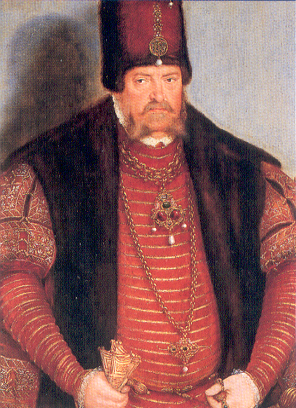
in the territories or convert to it but he did so after Joachim I died. J.II would become Elector in 1535. This family has close ties with the Saxon rulers. Some very nice paintings of J.II by Lucas Cranach that I am trying put in the blog.
I think there are reports that J.II communed in both ways from time to time.
Peace and Grace in Christ. Illustrious, high-born Prince,gracious Lord! I have received the Credence of E.F.G. through Carlos; thereupon I have indicated to him my good thoughts to report to E.F.G.However about the Sacrament under one form I have said to him that if E.F.G. is conscience-minded and certain that it is God's command and ordinance it is not fitting or to be suffered that one partake of the Sacrament under one form being knowingly acting contrary to the command of God.
It is just as much against God knowingly against His ordinance to partake under one form as it would be knowingly to rob, murder and commit other sins as E.F.G. might well have been thinking for himself. So now it is better to entirely refrain from the Sacrament and (if it cannot be otherwise) and to be out of sorts, sick,or otherwise infirm than to act against conscience. Herewith be commended to God,Amen. On the Tuesday after George (30 April) Anno 1532. E.F.G.'s willing Martinus Luther,D.
NOTES: J promised his father Joachim I that he would never permit the Evangelical way
in the territories or convert to it but he did so after Joachim I died. J.II would become Elector in 1535. This family has close ties with the Saxon rulers. Some very nice paintings of J.II by Lucas Cranach that I am trying put in the blog.
I think there are reports that J.II communed in both ways from time to time.
Monday, May 01, 2006
Subscribe to:
Posts (Atom)